Six Possible Impacts of COVID-19 on Farming
Here are six specific things that farmers, farming families, ag employers, and employees need to be aware of and plan for.
University of Wisconsin-Madison

Here are six specific things that farmers, farming families, ag employers, and employees need to be aware of and plan for.
Extension La Crosse County is happy to be partnering with La Crosse Area Family YMCA, Western Technical College, and People’s Food Co-op to bring the Garden Toolbox Series to the La Crosse Area! The first session of the Garden Toolbox Series; Let’s Get Dirty (understanding your soil and fertilizer), is on Tuesday, February 25th!
Extension La Crosse County will be offering General Farm Private Applicator Training at the Holland Town hall on January 28th and the Greenfield Town hall on February 13th. Please RSVP one week in advance.
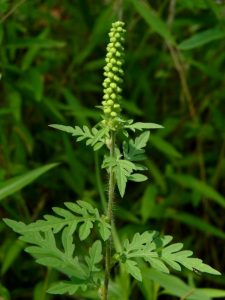
For those with allergies and those who work in crop fields, ragweed is a very well-known pest. Two of the most common types we have in the area include Common and Giant Ragweed. In this report, I will discuss identifying the plant, ways to control it, and mention some research coming down the pipeline.
Tuesday, August 20th is the Crop Management Field Day! Extension Agriculture Educators and UW Soil Scientists will be speaking, and you can bring samples of problems you’re having with crops for identification and management considerations.
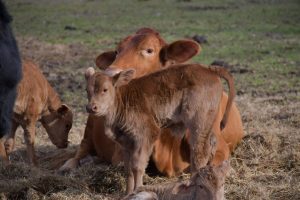
The 2019 Beef Cow-Calf Workshop will be held on both Tuesday, August 6th in Arcadia, WI and on Wednesday, August 14th in Cashton, WI. Area UW Division of Extension Agriculture Agents will present on production and harvesting for late planted, fall seeded small grain and cover crops for cattle feed, winter feeding considerations for using this year’s crops and alternative feedstuffs, and cost of production overview.

For a crop to be considered a cover crop RMA states that “For crop insurance purposes, a cover crop is a crop generally recognized by agricultural experts as agronomically sound for the area for erosion control or other purposes related to conservation or soil improvement.” Soybean and corn both meet this requirement. However please remember that BMP’s must be followed to meet this requirement. Every producer who eclares Prevent Planting must get approval from his or her crop insurance agent before any Prevent Planting management plan is implemented.
This bulletin quickly reviews crop insurance rules to help Wisconsin farmers understand late and prevented planting dates and options as this cold wet spring continues.
The Annual UW Pest Management Update will be held in Bangor, Wisconsin at The Log Cabin on Friday, November 16, 2018. Registration will begin at 8:30 a.m. with the program running 9:00 a.m. to 12:00 p.m. The Log Cabin is located at N4697 State Road 162. There is a $40 pre-registration fee that is due by November 2, 2018.
Dusty conditions are common on farms when working with grain, hay, silage and other products. Recent wet conditions from excess rain and flooding often makes these issues worse especially as products begin to grow mold and deteriorate. In addition, even during normal times, in the fall, Wisconsin producers work feverishly to get crops harvested before […]
“The WI Soybean Marketing Board (WSMB) sponsors free nematode testing to help producers stay ahead of the most important nematode pest of soybean, the soybean cyst nematode (SCN). Eggs of SCN persist in the soil between soybean crops so a sample can be submitted any time that is convenient. The soil test report indicates the […]
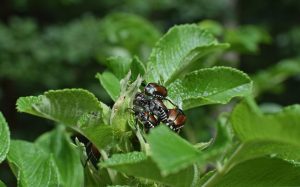
The high number of Japanese Beetles emerging might result in some corn and soybean fields, or parts of some corn and soybean fields needing to be treated with an insecticide.